Ridge Augmentation (Horizontal or Vertical Bone Grafting)
Ridge augmentation restores lost jawbone in areas where teeth are missing, helping to create sufficient width or height for dental implants. This is often needed after tooth extraction, trauma, or periodontal disease.
How Ridge Augmentation Works
- Bone Graft Material: Autograft (your own bone), allograft (donor bone), xenograft (animal-derived), or synthetic bone.
- Barrier Membrane: A resorbable or non-resorbable membrane is placed over the graft to protect it and guide bone growth.
- Closure: The gum tissue is sutured over the graft to promote healing.
Healing Timeline
- Initial healing: 1–2 weeks for gum tissue closure
- Bone integration: 4–6 months (sometimes up to 9 months for vertical augmentation)
- Implant placement: After sufficient bone regeneration, implants can be placed with optimal stability
Benefits of Ridge Augmentation
- Restores bone width and height for implant support
- Improves long-term implant success
- Prevents future bone loss in the jaw
Sinus Graft (Sinus Lift)
A sinus graft, or sinus lift, is performed in the upper jaw when the sinus has expanded into areas where teeth are missing, leaving insufficient bone height for implants.
How a Sinus Graft Works
- Access the Sinus: A small window is created in the lateral sinus wall.
- Lift the Sinus Membrane: The sinus lining is gently lifted to create space for bone graft material.
- Add Bone Graft: Bone material (autograft, allograft, xenograft, or synthetic) is packed into the space.
- Closure: Gum tissue is sutured over the graft for healing.
Healing Timeline
- Initial gum healing: 1–2 weeks
- Bone integration: 5–8 months (sometimes longer for larger grafts)
- Implant placement: Implants can be placed after the bone is strong enough to support them
Benefits of Sinus Grafting
- Increases bone height in the upper jaw
- Enables placement of longer, more stable implants
- Prevents implant failure due to insufficient bone
Click here to learn more about recovery & care →
A sinus lift is performed to create adequate bone support for implants in the upper jaw. Recovery usually involves mild swelling or sinus pressure for a short period. Following sinus precautions and post-operative instructions provided by Mayflower is essential for a smooth recovery.
Types of Bone Grafts and Membranes
Bone Grafts
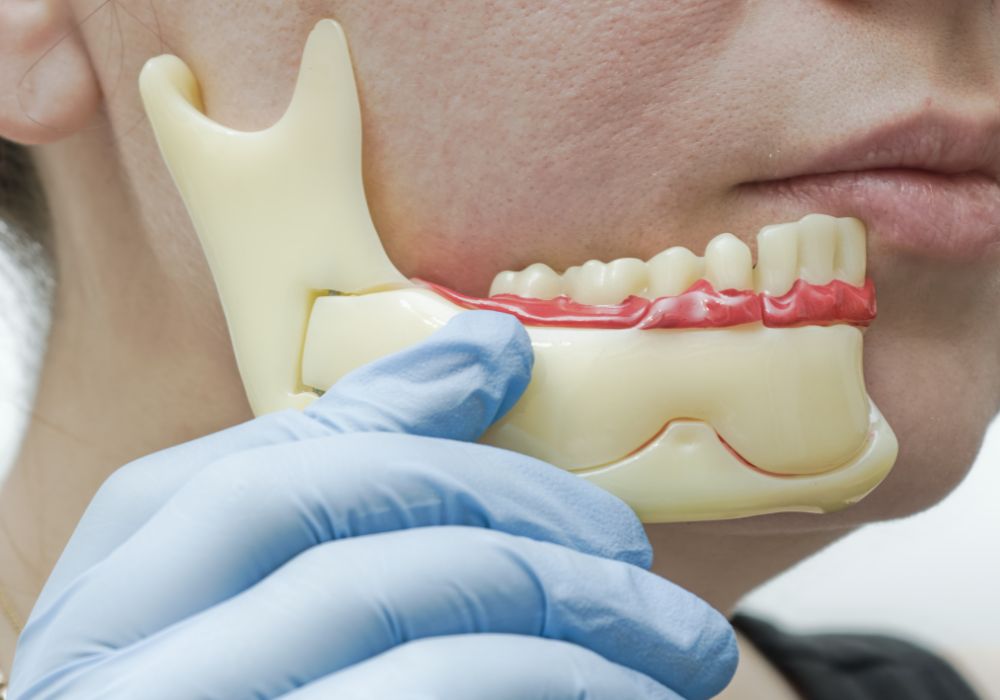
During a bone graft, bone material is added to the jaw, which acts as a scaffold for new bone to grow. Over time, your body naturally replaces the graft material with healthy, strong bone, creating a solid foundation for implants or other dental restorations.
- Autograft: Bone harvested from the patient (gold standard for integration)
- Allograft: Donor bone processed for safety
- Xenograft: Animal-derived bone (commonly bovine)
- Synthetic bone: Man-made materials that stimulate bone growth
Membranes
A membrane is a barrier placed over a bone graft to protect it while new bone grows. Membranes are essential in guided bone regeneration, a technique that ensures the bone regenerates in the correct area without interference from surrounding soft tissue.
- Resorbable membranes: Gradually dissolve, protecting the graft while bone forms
- Non-resorbable membranes: Provide long-term barrier protection, sometimes require a second procedure to remove
At Mayflower Periodontics and Implant Center, we carefully plan and utilize our expertise during ridge augmentation and sinus graft procedures that allows for successful dental implant placement, even in challenging cases. We ensure that each patient receives a customized approach for long-lasting, stable implants.